Read News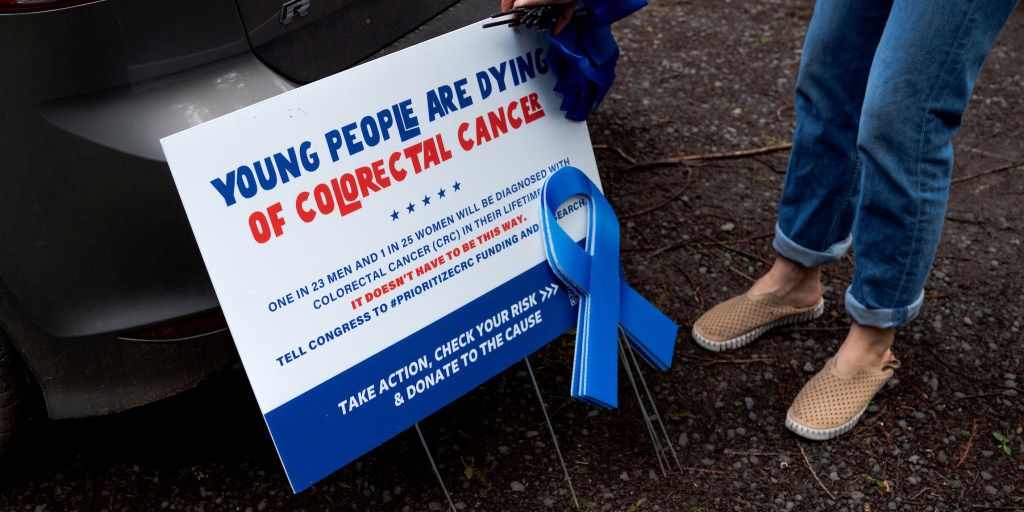
Jo Henderson was 17 when she was diagnosed with advanced colorectal cancer . It came after months of symptoms — stomach pain, bloating, constipation — and months of testing. “I was expecting a gluten allergy, lactose intolerance,” said Henderson, now 18, of Seekonk, Massachusetts.
“Literally anything but cancer.” Colorectal cancer in people younger than 20 is exceptionally rare: People like Henderson are about one in a million , and account for fewer than 100 cases per year in the United States. But a new study found that most cases of colorectal cancer in kids and teenagers are aggressive, and often diagnosed at advanced stages. The findings show that “the adolescent and the youngest of the young adults are at particular risk for bad outcomes and are a unique and vulnerable population even compared to people in their 30s and 40s,” said Dr.
Danielle Cameron, the director of pediatric surgical oncology at Mass General Brigham Cancer Institute in Boston, who worked on the study. Jo Henderson's first day of chemotherapy in January. Courtesy Jo Henderson “They are at higher risks for more aggressive types of colorectal cancers and more opportunities for diagnostic delays,” she said.
Cameron stressed that cases in adolescents and very young adults are “still very, very rare.” But anecdotally, experts say they are seeing rates begin to tick up. Worldwide, rates of colorectal cancer are rising among people in their 20s and 30s. A person born in the 1990s is four times more likely to be diagnosed with colorectal cancer before age 50 than people born in the 1960s were.
Previous research has focused on colorectal cancer in adults under 50 . Cameron and her team went younger, focusing on people under 21. The team identified 84 adolescents, with a median age of 16, in the United States who’d been diagnosed with colorectal cancer from 2012 through 2023. (Henderson was not a part of the study and Cameron was not her doctor.) The research will be presented at the American Academy of Pediatrics’ national conference in San Diego on Saturday.
It has not yet been published in a peer-reviewed journal. Most of the young people in the study, 80%, weren’t diagnosed until their cancer had reached Stage 3 or Stage 4, which means the cancer has spread. That tracks with Henderson’s diagnosis: By the time her cancer was found, it had spread to her ovaries.
Once a cancer has spread, it’s much more difficult to treat — in the study, about 37% of the patients’ cancer returned and 45% of the patients died. Diagnosing colorectal cancer in adolescents can be challenging. They’re decades away from colonoscopies to screen for the disease, and, according to Cameron, “the symptoms they are presenting with are vague.” In the study, about 74% of people reported back or abdominal pain , and about 45% reported changes in bowel habits.
A similar portion of people reported unexplained weight loss and about 32% had rectal bleeding. “There are a lot more common things that cause those symptoms,” said Dr. Tara Henderson, chair of the department of pediatrics at the Yale School of Medicine, who was not involved in the research. (Tara and Jo Henderson are not related.) Dr.
Christopher Lieu, co-director of gastrointestinal medical oncology at the University of Colorado Anschutz in Aurora, Colorado, said that not every child or teenager who loses weight or has abdominal pain should get a colonoscopy, “but taking symptoms seriously is important.” If a doctor has ruled out more common issues such as irritable bowel syndrome and things aren’t improving in the short term, doctors should consider ruling out colorectal cancer, said Lieu, who wasn’t involved with the research. “If it is colorectal cancer, the more we can catch these cases at early stages of disease, the better outcomes will be,” he said. And then there’s “the million-dollar question,” as Cameron calls it: What’s causing the rise in colorectal cancer in young people?
She suspects that it likely has to do with DNA changes brought on by environmental exposures during childhood. Dr. Kimmie Ng, the director of the Young-Onset Colorectal Cancer Center at Dana-Farber Cancer Institute in Boston, said that the rise in ultraprocessed food could be playing a role.
Ng, who is Jo Henderson’s oncologist, noted that her previous research found that women who ate more ultraprocessed foods had a higher risk of colon polyps that can be precursors to cancer. Studies looking at whether microplastics could play a role are ongoing, she said. A common risk factor for colorectal cancer is having a first- or second-degree relative — a parent, sibling, grandparent, aunt or uncle — who’d had the disease.
But that was only the case for 20% of the people in the study. Jo Henderson's last day of chemotherapy was in June, just two months before she started her freshman year of college. Courtesy Jo Henderson However, “despite there being no family history, they may still have a genetic predisposition,” said Tara Henderson.
About half of the patients in the study underwent genetic testing, which revealed a handful of genetic mutations that can raise the risk of cancer. These mutations aren’t necessarily inherited; instead they can be caused by certain exposures, or simply by chance. “It really does suggest that some of the exposures that are occurring early in life are playing a role in early-onset colorectal cancer,” Lieu said.
After her diagnosis, Jo Henderson launched into treatment. In December, she had a portion of her colon removed, as well as both of her ovaries, before undergoing five months of chemotherapy. She’s on hormone replacement medicine and will need annual colonoscopies moving forward.
A colonoscopy in August showed no signs of cancer. It was just four days before she was due to move away to college. She’s now a freshman in the Powers College of Business at Clemson University.
Source: NBC News