Read News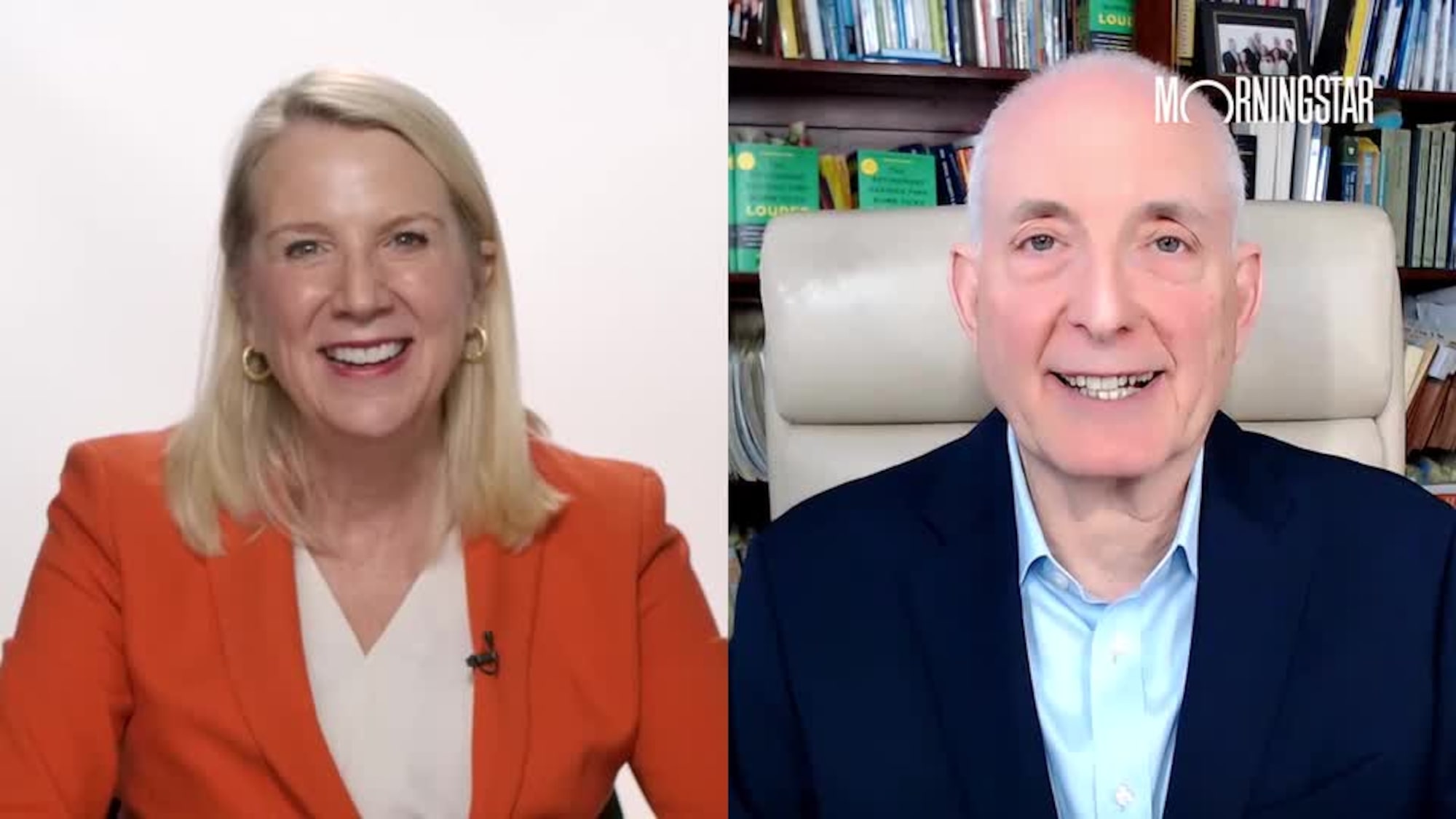
Key Takeaways Delaying your first RMD can result in two taxable distributions in the same year. RMD aggregation rules allow investors with multiple IRAs to satisfy their withdrawal requirement from a single account. Taking a QCD before an RMD can help satisfy the distribution requirement while reducing taxable income.
Roth conversions become less tax-efficient once RMDs begin because required distributions aren’t eligible for conversion. Recent rule changes have reduced penalties for missed RMDs, and investors who promptly correct errors can often qualify for a waiver. Christine Benz: Hi.
I’m Christine Benz from Morningstar, and thanks for joining us for this limited-edition series, Your Tax Playbook for Retirement, with Ed Slott . In this installment, Ed and I will be digging into the ins and outs of required minimum distributions. Ed, thank you so much for being here.
Ed Slott: Thanks, Christine. Great to be back. Should You Delay Your First RMD?
Benz: It’s great to have you. And we are talking about retirement and taxes. And one thing I’ve found retirees really love to hate is required minimum distributions .
So, we want to talk about the ins and outs of RMDs, starting with what’s called the required beginning date, which, for today’s retirees, it’s April 1 of the year after they turn 73. Should people wait until that required beginning date to take their first RMD or take it in the previous year when they actually turn 73? Do you have an opinion on that?
Slott: Yes. In most cases, it pays to take it in the previous year, the year you turn age 73. Because if you wait till April 1 of the next year, and that’s the only year, your first year, that you can wait.
And it wasn’t an April Fool’s joke, as people think. It was to give people a three-month grace period when they first switched to RMDs. It just happened the date was April 1.
But if you wait till April 1, you’d have to take your first two distributions, RMDs, that year, probably a larger tax bill. It’s almost always better, all things being equal, to take two separate RMDs in two different years, probably a lower tax bill in each year. Understanding IRA Aggregation Rules for RMDs Benz: In the common situation when someone has multiple traditional IRAs , can you talk about how it works?
Do they have to take an RMD from each of those accounts, or can they take the RMD from one account as long as they calculate the right amount that needs to come out overall? Slott: That’s exactly what they can do. It’s called aggregation rules.
If you have separate IRAs, first of all, under the tax law, maybe this is an easier way to understand it, you only have one IRA in a lot of different baskets. That’s how the tax law looks at it. So you can take your RMD, your total RMD, just as you said, calculated for all your RMDs.
Maybe you have five or 10 of them. Years ago, we had people who had way more than that. That was the years, this shows how old I am, when people opened up new IRAs at the bank because they got a free toaster.
So they would have 10 or 15 IRAs, not so much anymore. I don’t know. Again, that’s an age thing.
People probably don’t even know what I’m talking about. But yes, there was a time banks gave out toasters. Do you remember that?
Benz: A little bit. I remember banks giving out freebies, yes. Slott: Yeah, for new accounts.
All right. But now people have different IRAs for different reasons, maybe different beneficiaries, different investments, whatever reason. As long as you take exactly what you said, the total RMD calculated over all your own IRAs, not inherited IRAs , that’s a different animal.
Even if you take it all from one, that satisfies all of them. Benz: OK. Slott: That includes SEP and Simple IRAs, too, in that batch.
RMD Timing Strategies for Retirees Benz: I wanted to ask about timing of those RMDs. Is there a right time in a given year to take an RMD? And also I’d like your opinion on taking those RMDs monthly, quarterly, or just one annual sum.
Does it matter? Slott: It doesn’t really matter as long as you take the full amount by the end of the year. And I wouldn’t wait till the end of the year.
Most people take it toward the end of the year, which is normal because things may happen during the year. You’re still going to have to take it, but I’m not a big fan of the monthly or quarterly because you can forget. It’s easy to remember, take it at one time.
And if you do it, I would take it no later than—if you’re waiting toward the end of the year—no later than the first week in December. I wouldn’t take it after that because that’s when the banks and the financial institutions are getting deluged with requests, and sometimes they can’t even get them done. Some of them even have cutoffs—the 15th, the 20th of December, toward the end of the year.
And the problem is, if you ever want to reach anybody at these institutions in December, if you have a question, anybody that knows, in these institutions, anybody that knows anything about RMDs knows to take those last two weeks’ vacation from the financial institution. You won’t find them there. So try and get them done.
You could do it earlier, but I would say later in the year is probably better—for one other reason, too. For people who take QCDs, qualified charitable distributions, they can satisfy an RMD, but they only work if you do the QCD before the RMD. I sound like an acronym game, but QCD, the qualified charitable distribution, before the RMD.
For example, let’s say your RMD for the year is $5,000, but you normally give to charity anyway, and you like the idea of giving your IRA. It’s a direct transfer from your IRA to the charity, a qualified charitable distribution. If you do that first for the 5,000, just to make it easy, that was the same amount as your RMD, you don’t even have to take the RMD, then it’s done.
But if you had taken the RMD first and then you do the QCD, you can’t offset an RMD already taken. The QCD will still work on the next 5,000 you took out, but you’ll still have to pay tax on an RMD taken before you do a QCD. So that may be a reason to hold off toward the end of the year because many people do QCDs when they’re thinking about gifts in November and December when they make their other gifts they think of at holiday time.
That’s when they make gifts. So you want to try and time it so if you’re doing QCDs, do them first before the RMDs. QCD Contribution Limits Benz: OK, that’s helpful.
And I know you love that QCD maneuver. There is a contribution limit, right? There’s a limit on how much you can get into the QCD.
Slott: For this year, I was just looking at it, it’s $111,000 this year. It’s $100,000. The reason I look it up is because it’s $100,000, but there’s inflation, cost-of-living increases.
So, for 2026, you can do up to $111,000, not per account. Remember, we were talking about if you had 10 accounts. Per IRA owner.
But if you are a married couple, you each have your own limit. So, you could do up to $111,000, if you want to give that much, for the husband and the wife can each do that. Can You Convert to a Roth IRA After RMDs Begin?
Benz: We’ve often talked about how Roth assets aren’t subject to these RMDs. That’s one of the reasons you like them. Slott: Oh yeah.
Benz: But if RMDs have already started or are about to, is it too late to convert to Roth and get away from the RMDs, at least for that portion of the account? Slott: It is too late because you still have to take the RMD. The RMD cannot be converted, so it costs more to convert once you’re in RMD territory.
We always encourage people to get conversions done before the year you turn age 73. So if you’re turning 73 next year, this would be the year to get your last conversions in. It doesn’t mean you can’t convert.
It just costs more because you first have to take the RMD. The first dollars out are deemed the RMD, and those can’t be converted. What Happens if You Miss an RMD?
Benz: I wanted to discuss penalties with you, Ed, because a few years back there were some changes to the penalties levied on those missed RMDs if you happen to forget. Can you talk about the changes? They seem like it’s a little less punitive to miss an RMD than it once was, but what are you hearing?
Are people paying these penalties? Are they facing significant penalties for missing RMDs? Slott: Almost nobody is paying a penalty.
It used to be 50%. That was draconian, and almost nobody paid that. I only saw one case, which is an oddball case.
I’m not even going to get into the details. It came out of a private letter ruling where somebody didn’t know the law, and they asked the IRS if they could pay a penalty, and the IRS said, “Sure.” It’s a crazy ruling because they didn’t understand. They missed something.
They didn’t have to do it at all. But since they asked, the answer was yes. So it was a 50% penalty, and then it was reduced by recent laws, Secure 2.0, to 25%, which is still pretty hefty, and then reduced to 10% if you made up the shortfall within two years.
But even that, all of that can go away if—it can be waived by filing Form 5329 with your tax return and ask for a waiver of the penalty. But to get the waiver, and IRS waives it in almost every case where you did two things: You discovered the error first, before IRS did, because that shows good faith, and you took immediate corrective action. In other words, on your 5329, they give you a little blank—well, then nobody writes in, you type in when you do your taxes, see how old-school I am?
We used to write that in. You type in “missed an RMD” for whatever reason, “medical,” “death in the family,” good reason, “didn’t understand the calculation,” whatever it is, “confused about the tax rules.” “But as soon as we realized it, we took the back RMD and made it up, made it whole, and we’re asking for a waiver.” And you’ll almost always get a waiver. But the problem is, you never know because they don’t answer you.
They used to send out letters saying, “We’re approving your waiver. Zero penalty.” Now, if you don’t hear from them, no news is good news. It means they allowed the waiver.
So nobody should be paying that penalty even if you missed an RMD. We’re working with helping an advisor on a case where RMDs weren’t taken on a $2 million IRA for about 10 years. There was a problem with the estate, fighting beneficiaries, and they’re working on all of this, paying the penalty.
That’s what they asked us to do. We calculated over all the years, plus the interest—it was about $1.2 million. And they still don’t even know which beneficiaries are getting the money because of all the fighting.
It was a sloppy estate plan and all of that. But even that, because of all the problems, once all the dust is cleared on this, they may get a waiver as long as the back distributions were made up. So we made them a schedule of all the back distributions for each year.
So if they do that and show they made up the misdistributions once it was discovered, there was a problem with the estate, and they couldn’t get to the records, things were sealed, so they would probably get a full waiver on that penalty. Benz: Thank you so much, Ed. We always appreciate your perspective.
Slott: All right, thanks, Christine. Benz: Ed and I will be tackling other retirement-related tax issues next week, so please stay tuned. Thanks for watching.
I’m Christine Benz from Morningstar. The author or authors do not own shares in any securities mentioned in this article. Find out about Morningstar’s editorial policies .
Source: Morningstar