Read News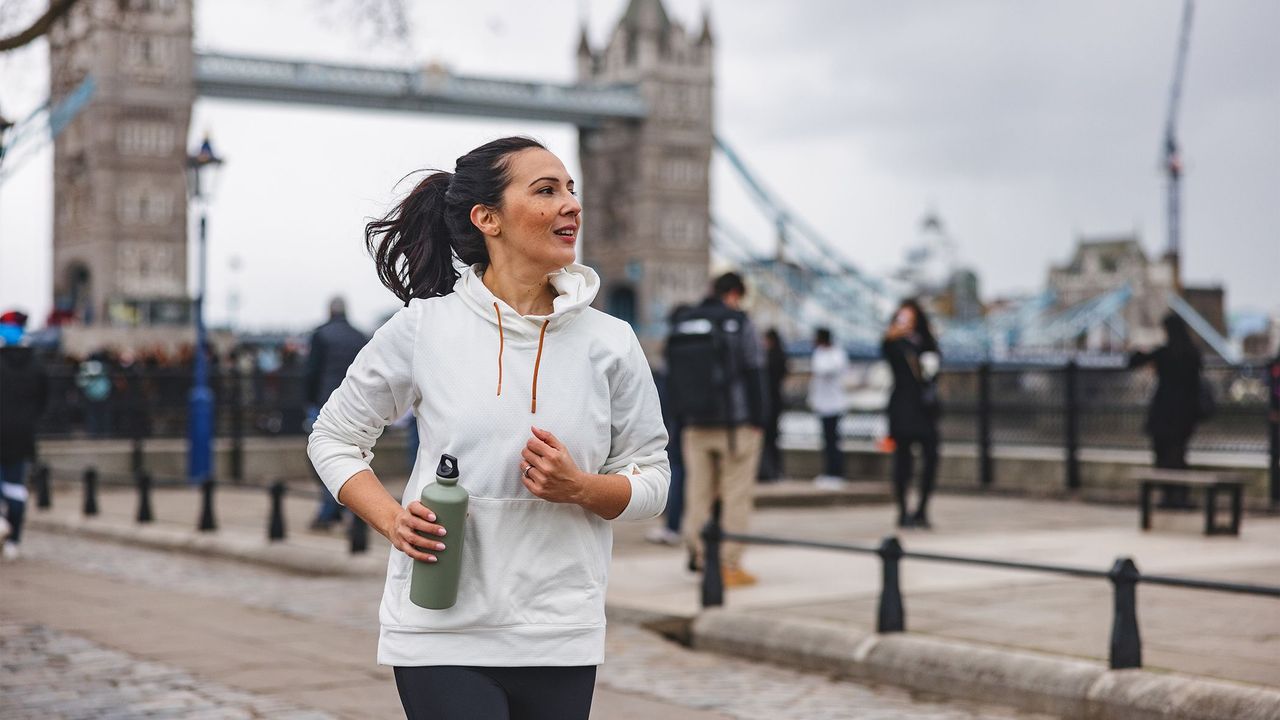
12 minutes ago Melissa Hogenboom Getty Images In general, the benefits of exercise outweigh the risks from air pollution. But there are steps we can take to minimise our exposure. I was waiting to cross the road during a recent morning run when a van pulled up beside me.
I couldn't help but inhale a thick plume of exhaust smoke. As a keen cyclist and runner living in London this can be hard to avoid. Active travel is built into my commute, so I'm often stuck behind traffic while I wait for lights to change.
As I cough away the latest wave of polluted air, I often wonder: is exercising on polluted roads doing me more harm than good? Here's everything you need to know about the risks and benefits, as well as how to best protect yourself when exercising in urban environments. What ' s in the air you ' re breathing?
Air pollution affects pretty much all the organs of your body , says Audrey de Nazelle, an associate professor at Imperial College London who researches the effects of pollution on exercise. "We used to think it was just respiratory disease, but it's also [linked to] cardiovascular disease, diabetes, cognitive function and reproductive impacts ," she says. One major concern is PM 2.5, tiny particles which measure just 2.5 micrometres across.
These fine specks are around 30 times smaller than the width of a human hair. They are released directly into the air from traffic, and can penetrate deep into our lungs, crossing into our bloodstream and travelling throughout the body. Over time, this particle accumulation can affect the brain.
In a 2025 review looking at 51 studies, a team analysed data from over 29 million people and found a link between three types of air pollution and an increased risk of Parkinson's disease. One of these were PM 2.5. "When the particles are this small, they can cross the blood brain barrier, cause damage to the vessels and the barrier, but also end up in your brain," says Haneen Khreis, an epidemiologist at the University of Cambridge and a co-author of the study.
But there are other pollutants, too. While exercising along busy roads or in cities, we will be breathing in nitrogen dioxide , which was also found by the review to increase the risk of Parkinson's Disease. Nitrogen dioxide is also thought to cause lung inflammation.
In the longer term, it can impair how our lungs develop and function. Then there's sulphur dioxide, ammonia, carbon monoxide and even ground-level ozone. When we run, cycle or exercise vigorously, we breathe faster and more deeply.
That means we tend to inhale more polluted air when running compared to walking. When covering the same distance, people exercising at a higher intensity receive a larger dose of toxic particles entering into their lungs. But perhaps surprisingly, sitting in a car doesn't completely shield you from air pollution either.
"Personal exposures when you're on a bike are actually lower than if you're sitting in a car ," says Rudy Sinharay, a consultant respiratory physician and lung cancer specialist at Imperial College London NHS Trust. "Whereas when you're cycling, you tend to be moving a bit more. There's a bit more air blowing." And it's not just traffic, as underground transport in cities such as London and New York can contain high concentrations of fine particles, much of them metal-rich dust generated by the friction of wheels, rails and brakes.
Getty Images Even in polluted areas, exercise reduces the risk of an early death (Credit: Getty Images) The benefits outweigh the harms "The good news is that the benefits that you get from exercising in polluted cities outweigh the risks," says de Nazelle. In fact, the exercise itself may be protecting our bodies from the pollution, she says. For a 2016 study , de Nazelle and colleagues looked into exactly this.
In a modelling study, they estimated that the health gains of walking and cycling outweigh the harms of dirty air. Only at exceptionally high pollution levels, such as those found in some of the world's most polluted cities like Delhi, India, do the risks begin to approach or exceed the benefits of prolonged exercise. And even in polluted areas, exercise reduces the risk of an early death.
A recent review paper found that exercising in air polluted environments was associated with a 26% reduction in mortality risk, compared with inactivity. As can be expected, exercising in cleaner air was found to be preferrable and had a higher reduction of 31%. For those living in urban environments, this should be encouraging, says de Nazelle.
However, the benefits of exercising outdoors may not always outweigh the risks of air pollution – it's important to factor in your own medical circumstances. Those with preexisting health conditions , such as asthma or cardiovascular disease, should be more cautious. However, how polluted the air you're breathing also makes a big difference.
In 2018, Sinharay and colleagues recruited healthy volunteers as well as older adults with chronic obstructive pulmonary disease (COPD) or coronary heart disease for a study. Participants were asked to take a two-hour walk in either a park or along a busy London street. The team found that after only two hours, those walking in an area with cleaner air showed improved lung and blood vessel function.
Those who walked in the area with high levels of pollution showed smaller benefits. In people with COPD, pollution exposure was associated with worse symptoms. In other words, exercise offsets many of the harms of pollution, but the reverse is also true: heavy pollution reduces the protective effects that exercise provides.
It even blunts the cognitive benefits of exercise. So for the most part the benefits outweigh the risks, but exercising in polluted air is still not ideal. How to minimise exposure For those of us who live in a busy city, we can't simply uproot ourselves to the countryside for a jog.
But the next best option is to find the greenest or least congested area around us. For instance, I have the option to cycle along a road with less traffic on my morning commute, but it does take a few minutes longer. Research shows that moving one or two streets away from heavy traffic slashes your pollution exposure by 20% to 30%, says de Nazelle .
And if you can take side streets, even better. One study found that opting for side streets instead of busy routes cut exposure by 50%. More like this: If possible, it's also a good idea to avoid rush hour.
Cars sitting still in traffic create " pollution hotspots " says Khreis. Similarly, watch out for peaks of ozone during hot sunny afternoons, she advises. She explains that this potent chemical tends to form when it's really hot and there's abundant sunlight.
Combining these factors with the air pollution at rush hour exacerbates the problem. Finally, it might help to monitor local air quality pollution indexes . These can tell you the levels in your area on any given day.
Sinharay advises that on days with higher air pollution, exercising indoors or in parks is a better option. The bigger picture though, says Khreis, is that policy change will make a more meaningful impact beyond what we do on an individual level. "It's very much a systemic issue.
While those personal choices can help us reduce our individual exposures, the most effective protection is going to be to target the emissions at their sources." For my next run I think I'll stick to my local park. * Melissa Hogenboom is a senior health correspondent at the BBC and author of Breadwinners and The Motherhood Complex. She is melissa_hogenboom on Instagram. ** All content within this article is provided for general information only, and should not be treated as a substitute for the medical advice of health care professionals. -- For more science, technology, environment and health stories from the BBC, follow us on Facebook and Instagram .
Source: BBC