 Read News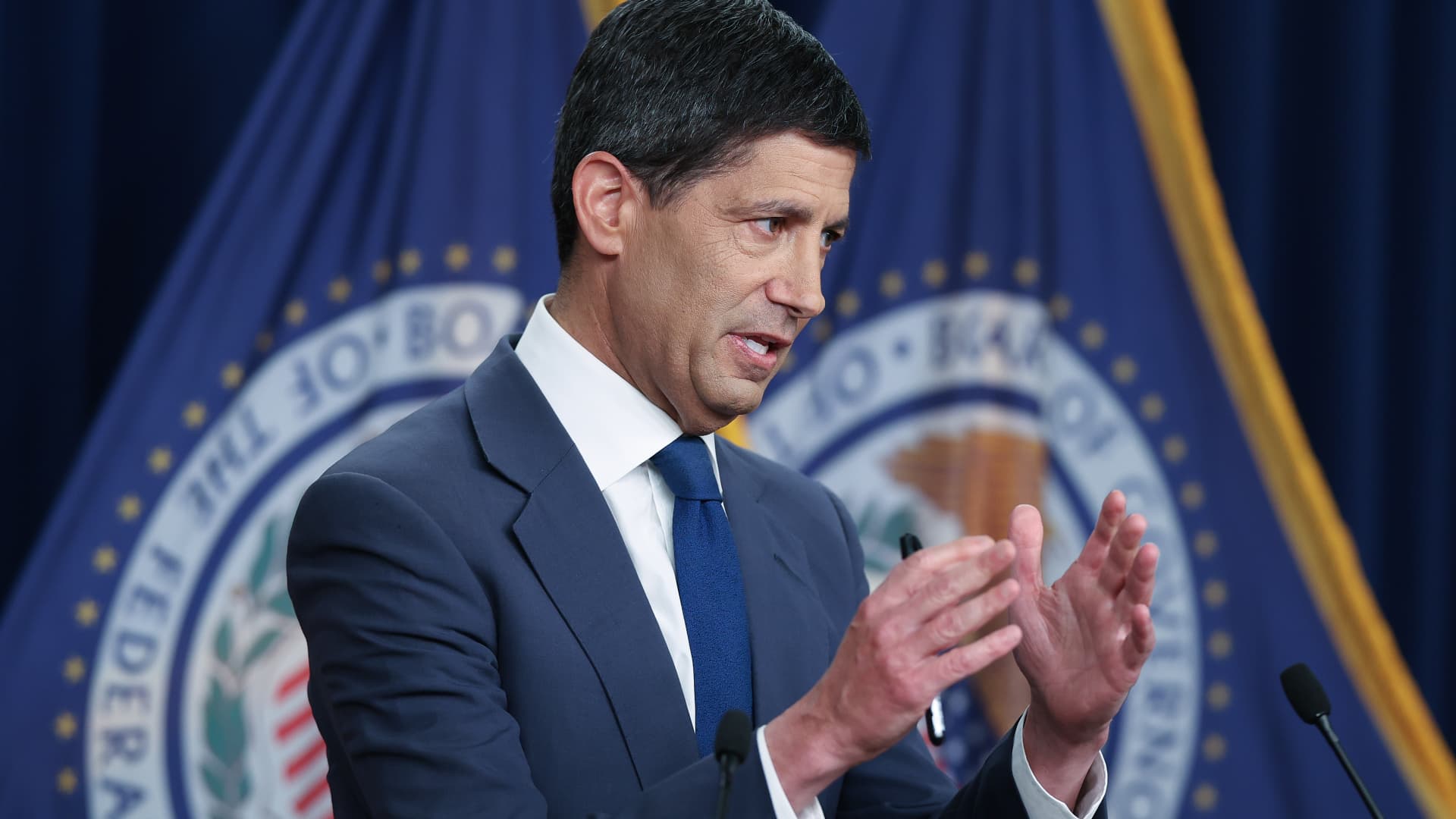
This is CNBC's Morning Squawk newsletter. Subscribe here to receive future editions in your inbox. Happy Wednesday.
Air travel may be getting more expensive, but a study released today shows consumers are at least reporting higher satisfaction levels with U.S. airports. Stock futures are higher this morning. The three major averages are coming off another losing day.
Here are five key things investors need to know to start the trading day: 1. Decision day Federal Reserve Chair Kevin Warsh speaks during a news conference at Federal Reserve Headquarters on July 29, 2026 in Washington, DC. Win McNamee | Getty Images News | Getty Images The Federal Reserve is widely expected to hike interest rates for the first time in more than three years today.
What's less certain is what Federal Reserve Chairman Kevin Warsh, who's been tight-lipped about the path of monetary policy, will say at his post-decision press conference. Here's what to know: Markets are nearly certain that the Federal Open Market Committee will vote to hike rates, but it's not clear how wide the margin will be. CNBC's Jeff Cox breaks down who's likely to be in the majority.
Respondents to CNBC's Fed survey see the central bank raising rates at least two times over the next year. That's a big change from a month ago, when less than half of respondents predicted even one hike. There's both good news and bad news for consumers: A hike could push up interest rates on savings accounts, but it would also lift borrowing costs on consumer loans.
The 10-year U.S. Treasury yield surged to its highest level since 2007 yesterday as traders looked ahead to this afternoon's decision. The benchmark note is little changed this morning.
Stocks have logged back-to-back losing sessions this week, signaling investors are reducing exposure in the run-up to the Fed's announcement. Follow live market updates here. 2. Taking sides Marc Benioff, chief executive officer of Salesforce Inc., left, and Jensen Huang, chief executive officer of Nvidia Corp., during the 2026 Dreamforce conference in San Francisco, California, US, on Tuesday, Sept. 15, 2026.
David Paul Morris | Bloomberg | Getty Images Nvidia CEO Jensen Huang isn't on board with Anthropic CEO Dario Amodei's call for antitrust exemptions to allow AI companies to coordinate a slowdown in development. In an interview with CNBC's Jim Cramer yesterday, he called such a move "completely unnecessary." Meanwhile, OpenAI CFO Sarah Friar told CNBC that she isn't worried about the consequences of hitting the brakes on development. "Even if we stop today, the amount of intelligence that's available in the world is massive," Friar said.
Executives of technology companies have diverged this week as the industry debates whether AI firms should pace innovation to address safety concerns. As CNBC's Samantha Subin writes, there are two camps : On one side, President Donald Trump, Nvidia's Huang and former White House crypto czar David Sacks; on the other, Anthropic's Amodei, OpenAI CEO Sam Altman and Elon Musk. 3. Conflict costs US Secretary of Energy Chris Wright speaks during a joint US-Japan announcement on investments in American manufacturing, during the second day of the G20 Ministerial Meeting on Energy Abundance in Houston, Texas on Sept. 15, 2026.
Ronaldo Schemidt | AFP | Getty Images Energy Secretary Chris Wright told CNBC yesterday that the closure of Saudi Arabia's vital crude oil pipeline is a "brief and temporary interruption" that will be "measured in days." However, satellite imagery appears to show damage to one of the pipeline's pumping stations, leading some experts to predict that repairs could take months. Despite Wright's apparent efforts to soothe investors on Tuesday, U.S. crude oil prices settled above $105 per barrel for the first time since May. WTI prices are lower this morning following a report that U.S. crude inventories rose last week.
The Iran war has cost the Pentagon $38.1 billion through Aug. 1 , or an average of $246 million per day, the Congressional Budget Office said yesterday. The nonpartisan agency estimated each additional month of fighting could cost an additional $2 billion to $3 billion. 4. Still unclear The U.S.
Capitol in Washington, July 22, 2026. Aaron Schwartz | Bloomberg | Getty Images The Senate voted yesterday to stop the Clarity Act from advancing, leaving the crypto-focused bill stalled on Capitol Hill despite months of negotiations. Republican leaders had released a new version of the bill on Sunday that included ethics restrictions focused on public officials profiting from crypto ventures.
But it appeared to not be enough: Democrats said they didn't feel Republican negotiators met their demands for measures addressing crypto-related earnings from Trump and his family. As CNBC's Tanaya Macheel and Garrett Downs note, the act's failure to clear the procedural hurdle is a clear blow for the crypto industry. Now, the sector will likely have to wait until next year for clearer regulation. 5.
Downshifting 2024 Ford F-150 Raptor Ford If you've been eyeing a Ford truck, we have good news. The automaker said it's decreasing the entry price of its F-150 performance models for the 2027 lineup, in addition to expanding the availability of V-8 engines. That still doesn't mean the trucks are cheap.
Prices for the 2027 Ford F-150 Raptor will begin at $77,800, while the 2027 Tremor will start at $62,400. Elsewhere in the auto industry: General Motors announced yesterday that the Chevrolet Silverado and GMC Sierra will be the first cars to have its new in-vehicle information and entertainment software experience. The rollout will begin later this year, GM said.
The Daily Dividend A new report from the Census Bureau showed Americans' income rose and poverty fell last year. Here are the key numbers for 2025: Real median household income: $87,460 Poverty rate: 10.2% — CNBC's Jeff Cox, Steve Liesman, Jessica Dickler, Sean Conlon, Spencer Kimball, Luke Fountain, Alexa LoMonaco, CJ Haddad, Jordan Novet, Justin Papp, Samantha Subin, Tanaya Macheel, Garrett Downs, Michael Wayland and Matt Peterson contributed to this report. Josephine Rozzelle edited this edition.
Source: cnbc.com